Does Form Create the Inner State, or Does the Inner State Create the Form?
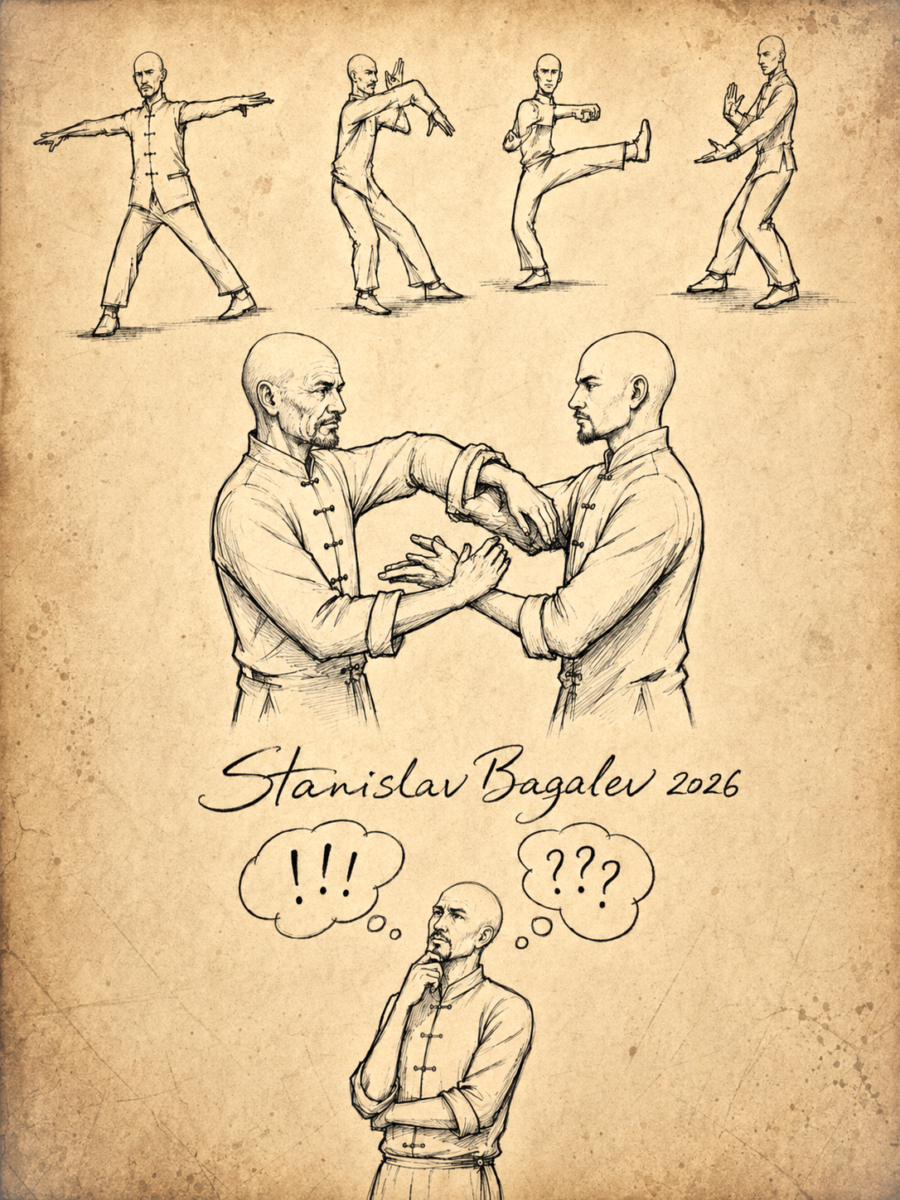
All over the world, we can see hundreds of people practising forms in the morning—different sequences of movements of the arms and legs, belonging to a wide variety of styles and traditions. Some are performed with weapons, others without. Some are practised slowly, others quickly. There are long forms and short forms, simple forms and complex ones.
But is this truly the path to the heart of martial art—to inner awareness and to the connection between body, energy, and mind?
Almost every master says that, traditionally, training should begin with form. A form is a kind of solo shadow-fighting sequence made up of predetermined movements. The student must learn the techniques and positions, align the body correctly, and perform every movement with precision.
The student follows these instructions, repeats the movements again and again, and gives everything in order to meet the required standard. Yet there is almost always something that has not been fully understood or performed correctly. The master or instructor makes a correction, and the student tries once more—and again, and again…
Many practitioners eventually come to believe that even if they become world champions in forms, they are still not ready to begin real work with a partner or to reach the true feeling and inner state of martial art.
My experience of more than forty years, however, has shown me something different.
No matter how many forms we know, how skilled we become, or how precise our movements are, forms by themselves do not necessarily lead us into the feeling of the here and now. They do not automatically create the ability to perceive action clearly as it unfolds in space and time through the movements and intentions of an opponent.
The Encounter That Changed My Understanding
An experience with my teacher, Grandmaster Keith Kernspecht, thirty years ago became decisive in shaping this understanding.
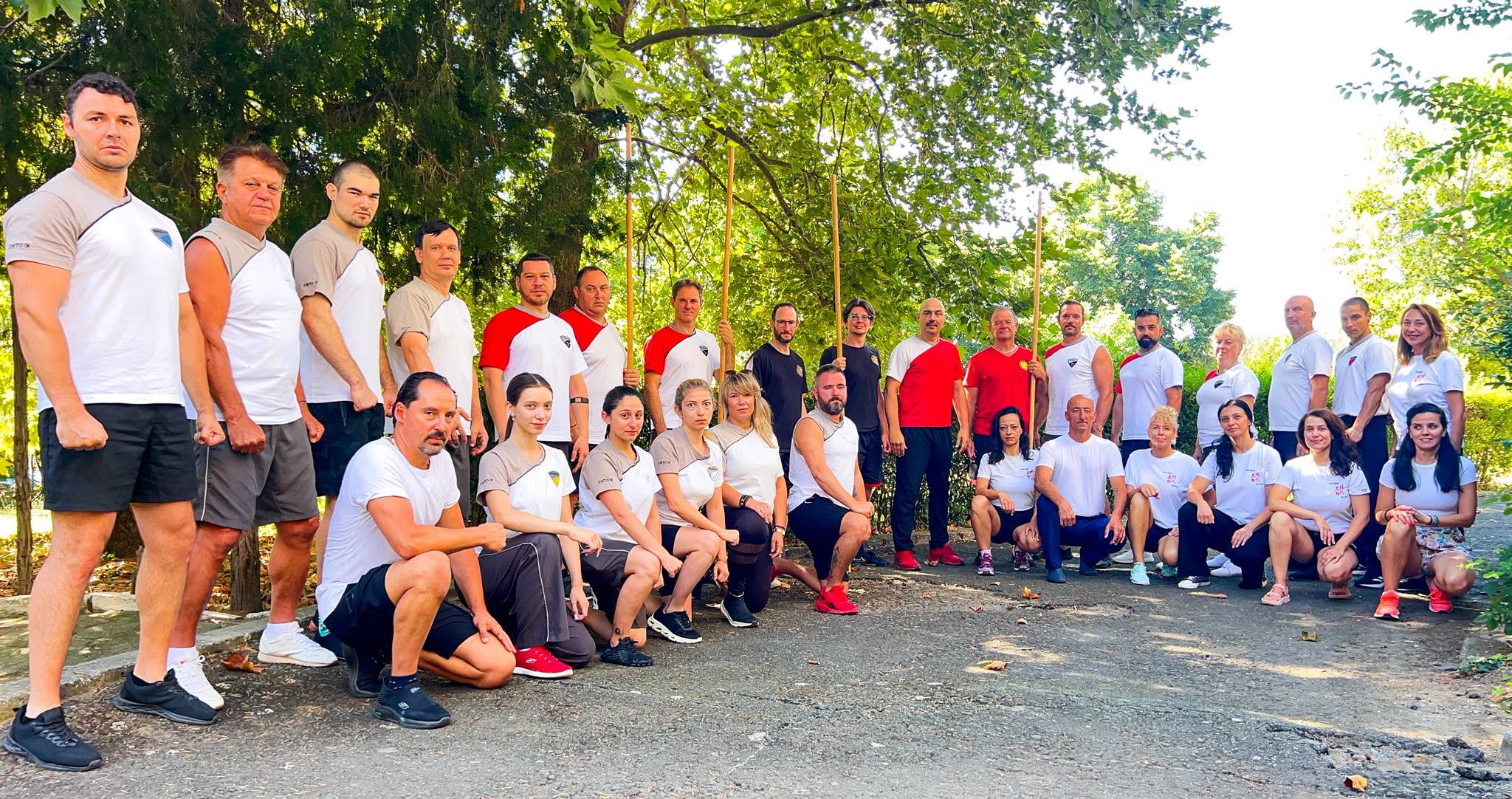
On 20 March 1996, a German delegation of EWTO masters arrived at Plovdiv University. At that time, the university offered a specialisation in Chinese martial arts, where I taught and conducted training sessions, practical classes, and lectures.
The delegation included Grandmaster Kernspecht, Grandmaster Bill Newman, Sifu Oliver, Sifu Giuseppe, Sifu Roland, and Sifu Heinrich. They gave a demonstration and introduced WingTsun and Escrima to the students.
Afterwards, a seminar was held in the packed university hall, where Grandmaster Kernspecht demonstrated different ideas, principles, forms, and techniques.
He noticed the expression on my face and immediately understood that something was not right. He came over to me and asked:
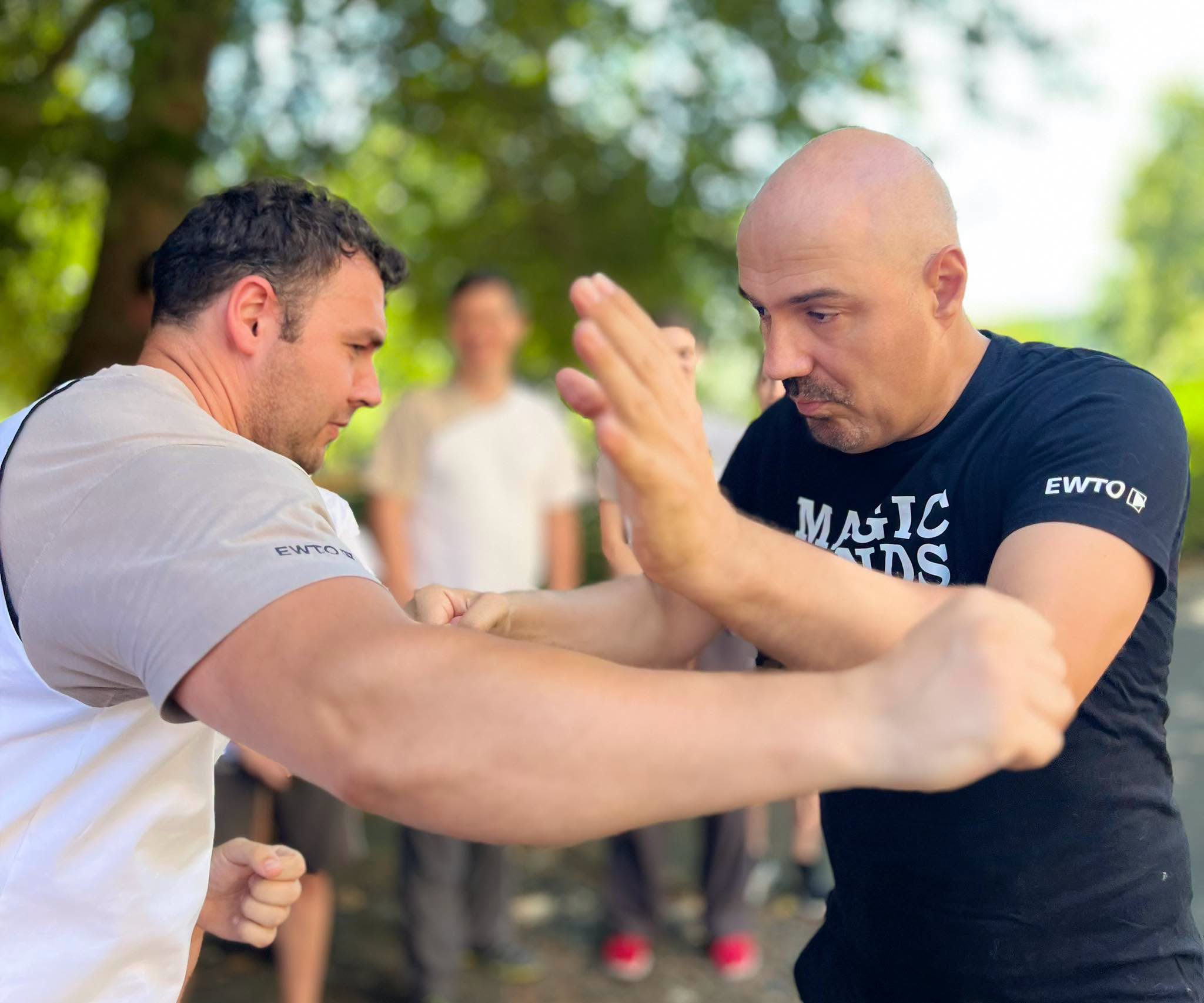
“Have you practised Chi Sau—sticky hands?”
“Yes,” I replied.
“With one hand or with two?”
“With both one and two hands,” I answered.
Then he said:
“Oh, really?”
He extended his arms towards me, and the moment I touched him, I understood that I knew nothing.
It was another universe.
I realised that everything I had done until then had prepared my body, but it had not brought me into the true feeling of martial art.
This, for me, is the real way of teaching—from the core, from inner awareness and feeling, towards application in different situations.
We Cannot Learn a Technique for Every Situation
The possible situations in a fight are countless. We cannot learn enough separate techniques to cover every variation.
But when we train sensitivity at the point of contact, we can feel and understand change. We can follow, lead, redirect, or transform force as it appears in different directions and at different moments.
What matters is not only how a movement looks, but what it contains.
Form is the visible expression. Inner state, intention, and feeling are its content.
My Conversation with Grandmaster Yang Jun
Later, I had a similar conversation with my personal Tai Chi teacher, Grandmaster Yang Jun, the inheritor of the Yang family tradition of Tai Chi Chuan. This time, my questions were even more directly focused on the same subject.
“Shifu,” I asked, “do you teach Tai Chi to your son?”
At the time, his son was about five or six years old.
“Yes, of course,” he replied.
I asked:
“Do you teach him forms?”
“No.”
Surprised, I continued:
“Then what do you teach him?”
“Tui Shou—pushing hands.”
“The fixed exercises?”
He smiled and answered:
“No. Free pushing hands.”
At that moment, I understood that the path does not necessarily have to move from form towards feeling and inner state. It can move in the opposite direction—from training with the master, from sensitivity and work at the point of contact, towards form and application.
There, the art is transmitted almost without words.
This is a direct transmission of feeling, principle, and inner state—an experience that cannot be confused with anything else.
Why Are Forms More Widespread?
Unfortunately, it is very difficult to find a master who possesses this level of skill and sensitivity, who can explain clearly what is happening, and who has the patience to teach systematically, guiding the student step by step.
This way of learning is slow, difficult, and often expensive because it requires direct, personal work with the teacher. It is best developed through private lessons or in very small groups.
That is why the more popular, accessible, and widespread method of teaching remains the practice of forms.
The master stands in front, and everyone follows. He may correct some of their movements, but he cannot touch and feel every student. Each person performs a form, then receives the next one, and then another, and another…
At a later stage, two-person forms with predetermined choreography are introduced. They imitate genuine sticking, contact, and sensitivity.
But the moment the participants leave the predefined sequence, the student may once again become confused and unprepared for change—and for the change within the change.
What Should I Choose, and How Should I Train?
First of all, you need to understand whether your teacher is familiar with the direct transmission of sensitivity through contact.
In Wing Chun, this is Chi Sau—sticky hands.
In Tai Chi, this is Tui Shou—pushing hands.
It is within these methods that the ability to sense change through connection with a partner is encoded.
The other two essential methods of training are form and sparring.
They are also extremely important.
In form, we train with ourselves.
In contact work, we train sensitivity, adaptation, and connection with a partner.
In sparring, we test our skills in movement, under pressure, uncertainty, and stress.
Training at the point of contact is the central link. It creates direct feeling, which can later be carried into form, application, and sparring.
Then the three elements of training acquire a natural inner logic:
Feeling — Form — Application.
Movement is no longer an empty external shell. Form becomes filled with content, and content finds its form.
That is why, for me, the answer is clear:
Form by itself does not create the inner state.
It is the inner state, sensitivity, and understanding that create true form.
When the inner content is correct, the outer form arises naturally—alive, adaptive, and capable of changing together with change itself.
Master Stanislav Bagalev
Sofia, 2026